
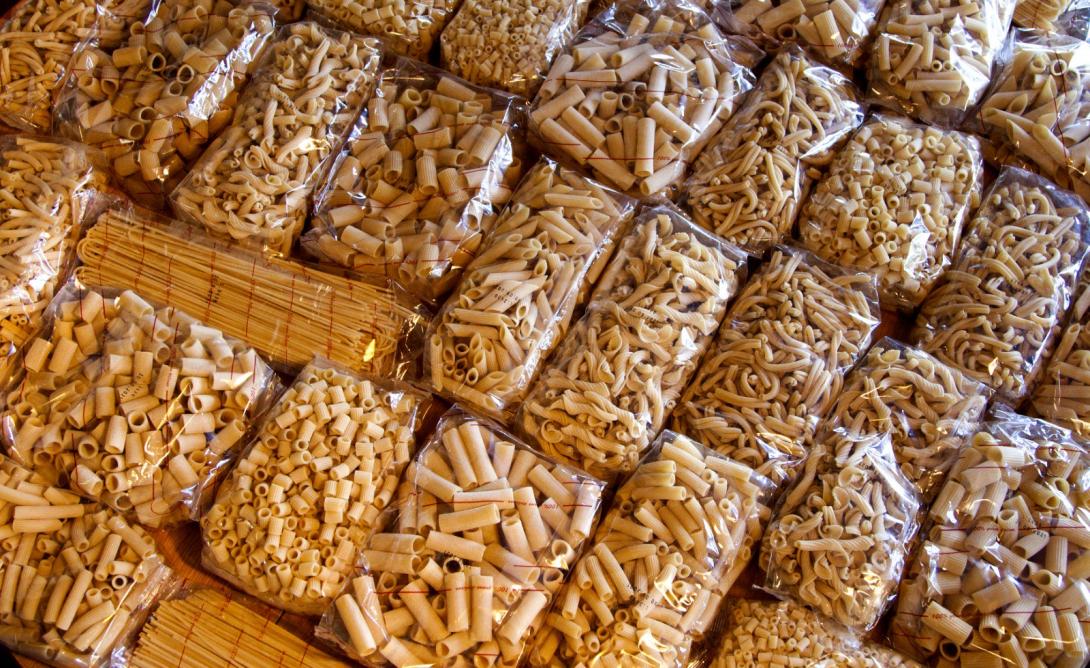
A whole-wheat pasta cooperative that’s as good for the community as it is for the land
Originally published by Earth Island Journal
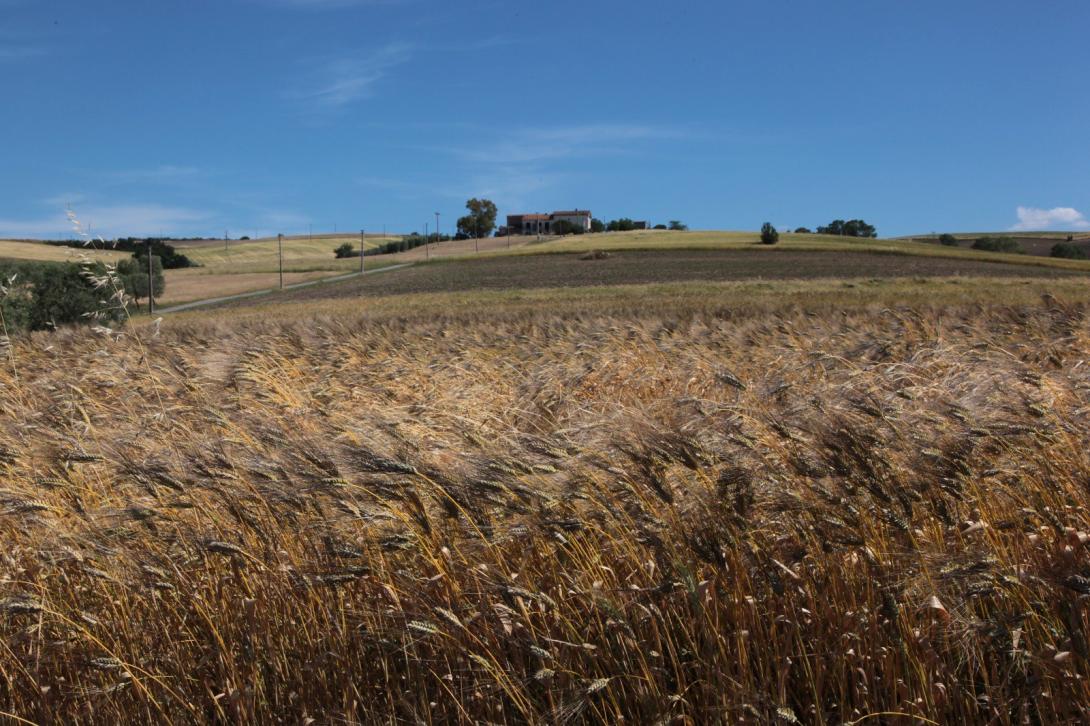
Tucked into the hills outside Benevento, in the southern Italian region of Campania near Naples, Mirra Farm is defined by 70 hectares of rippling wheat fields. Previously specializing in broad-leafed tobacco, Gasperino Mirra and his children have spent the last two decades returning their farm to a more integral regional staple: grain. Today, Mirra is reintroducing ancient varieties of Italian durum wheat, such as Senatore Cappelli and Saragolla, which are used to make high-quality flour for pasta.
The farm is also part of a network of artisan pasta makers as well as other small-scale producers and millers working together to offer nutritious, and resilient, pasta made by and for the community.
Campania is one of the oldest pasta-producing regions in Italy, and the country’s leading pasta exporter. As such, major corporate brands dominate the landscape, with Voiello and Garofalo among the most well known. Much of the industrial pasta sector relies on modern durum wheat varieties bred for high yields, making them well suited to large-scale pasta production. Achieving their full yield, however, can require large amounts of inputs, such as nitrogen fertilizer.
It is in this industrial context that the Mirra family wanted to offer an alternative: “I decided to switch to ancient varieties almost immediately, after only one year with commercial ones,” explains Mirra. The decision was driven as much by concerns about health as by the long-term sustainability of the farm. In addition to not requiring much enrichment, recent research shows that older wheat varieties preserve more genetic diversity, including traits for resistance to some diseases.
Between 2008 and 2010, Mirra opened his own mill, built around a decommissioned millstone that he tracked down in Naples and rebuilt with his son. Having his own mill gave him greater control over the grain and allowed him to keep nutritious germ in the flour rather than remove it, as is done in conventional milling to extend shelf life. Mirra’s flour only lasts four or five months, but it retains more health benefits and more of its character, he says.
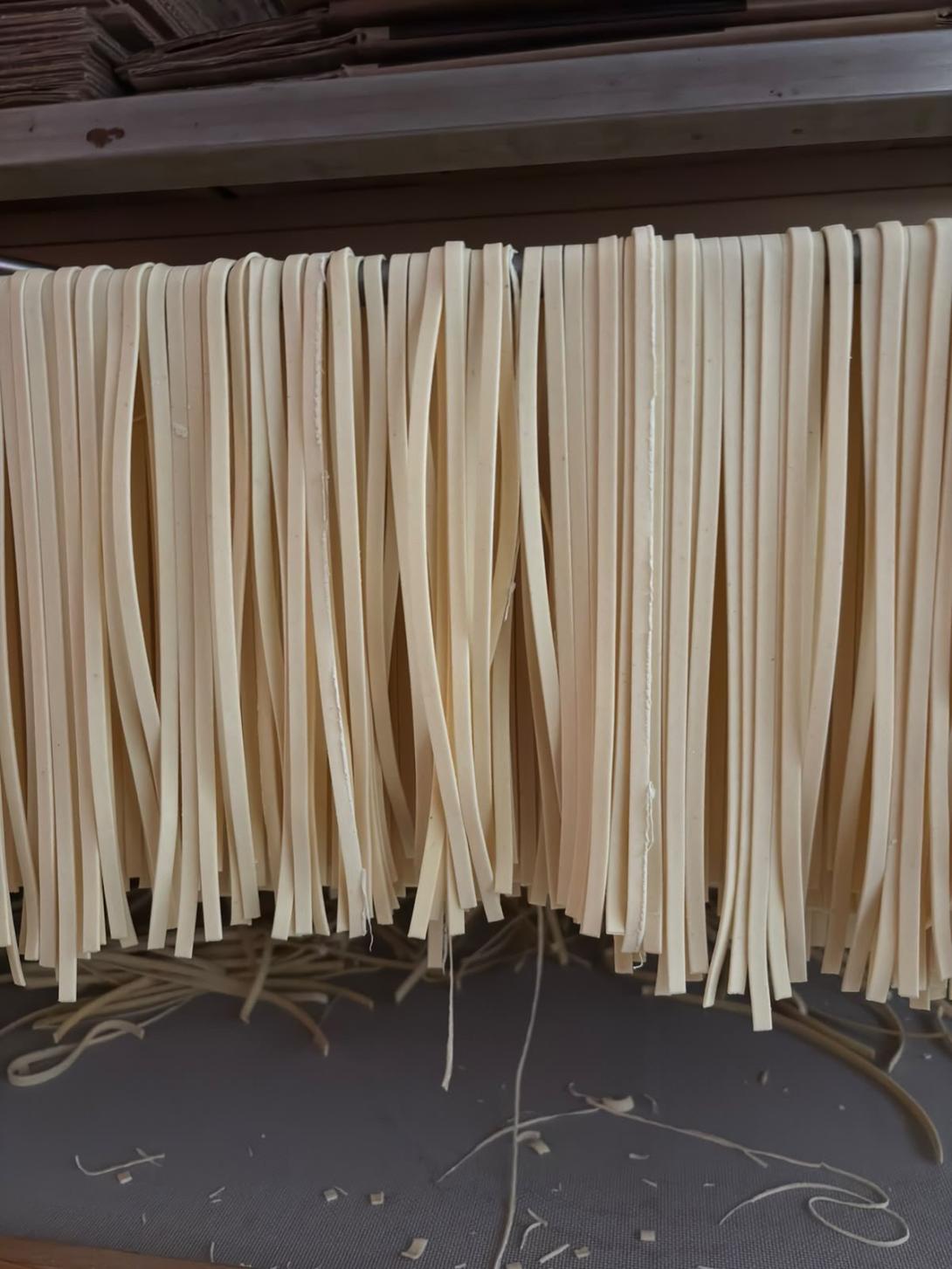
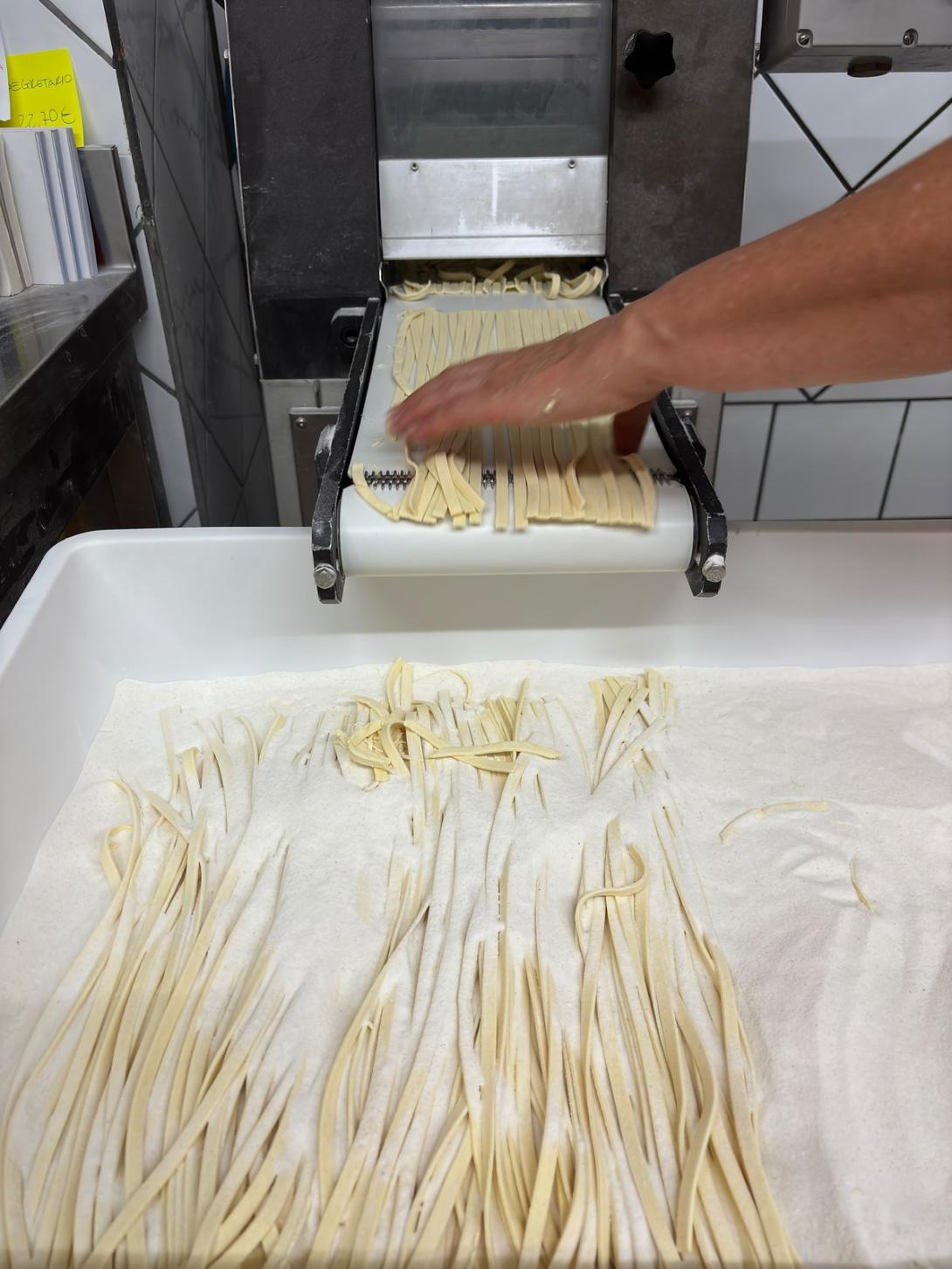
Producing high-quality pasta required working closely with local pasta makers and experimenting until they had a product that could live up to Italy’s uncompromising expectations for flavor and texture. Much of that experimentation was about balance: Leaving too much of the wheat bran and germ in the dough causes pasta to crack as it dries, so they learned to remove just enough of the coarsest bran to make stable semi-whole wheat pasta. The result is slightly rougher in appearance than its polished commercial counterparts, but more intense in flavor.
Quality wheat, Mirra realized, also relies on quality soil. So a few years ago, he began alternating wheat with other crops on a three-year rotation to add diverse nutrients into the soil and restore its health. “One year we plant wheat, the following year a legume like lentils or chickpeas,” he says with pride. In the third year, he plants sainfoin: a deep-rooted, nitrogen-fixing legume that reduces the need for synthetic fertilizer. Last year, sainfoin’s red flowers attracted local beekeepers, who brought hives to the farm. The effect of the pollinators, Mirra says, could be seen beyond the sainfoin fields; nearby trees produced more fruit and flowers than ever before.
Once his flour and pasta were up to standards, the next step to creating community pasta was tackling the way it’s consumed. In 2014, Mirra joined a small association of farmers and local families, today called Cumpanatico Sud, whose name comes from the Latin words cum panis, meaning “with bread” — or eating together. What started with just 20 families and 1 farm is now a cooperative of 130 families, 4 farms, 2 mills, and 2 pasta makers. Together, they’re creating a local and sustainable supply chain for organic pasta. “At the heart of the project is a pact built on reciprocity between producers and consumers,” explains Carmen Cotronei, who served as president of Cumpanatico Sud until last year and now sits on the association’s board.
Members of the cooperative pay an annual fee of around €130 that covers a basket of pasta, generally 25 kilograms delivered once a year, and other local food products from participating farms. For members, these additional products offer a chance to try new goodies, like this year’s yellow cherry tomato passata, alongside perennial favorites, including honey, jams, and baked goods.
Roughly one-third of the annual cost is paid up front to ensure fair prices and financial security for farmers, regardless of how the season goes, since climate change is making weather more unpredictable. In return, farmers commit to minimum harvests, transparency, and sustainable practices, such as crop rotation, avoiding synthetic fertilizers, and offering fair wages and humane working conditions for farmworkers.
Part of the membership fee also goes toward a shared solidarity and risk fund, to which producers allocate around 3 percent of their annual earnings. The fund serves a double purpose: In difficult years, it helps cover unexpected costs. For instance, after an unusually humid growing season in 2024, the association had to pay to test its grains for mold before they could be processed.
In good years, when the fund is not needed to offset costs, it’s used to support new investments or to co-finance social initiatives, like the community bakery Il Forno di Vincenzo in Eboli, near Salerno, or a free dental clinic housed in a Naples community center.
Members of Cumpanatico Sud order their pasta months in advance, receiving it at the end of the production cycle, usually between September and October. Their commitment, however, begins at the time of sowing, usually in November or December of the previous year, and follows the entire cycle through to harvest, milling, and finally pasta production. That’s when each member receives their quota of pasta, which can be tailored to their personal preferences — like more or less whole wheat — to accommodate different tastes.
“The pasta we produce could never compete with industrial prices,” says Cotronei. “It is not ‘cheap’ pasta, but neither is it meant to become an elite product accessible only to a few. The solidarity fund plays a crucial role here, allowing the project to absorb unexpected costs and keep prices within reach.” This relationship goes beyond a simple transaction; it’s a bold, community alternative to the extractivist industrial food chain, rooted in mutual trust and collective responsibility.
“In 2025 we produced 5,400 kilograms of wheat,” says Biagio Sorrentino, the current president of Cumpanatico Sud, who took over from Cotronei at the end of last year. “We yielded approximately 3,500 kilograms of pasta.”
The association’s approach was inspired by the community supported agriculture (CSA) model, spearheaded in in Italy by Arvaia, one of the oldest CSAs in the country. Arvaia now counts roughly 200 members around the Bologna region, who each receive a weekly share of six to seven kilograms of fresh produce, mostly fruits and vegetables.
Founded in the wake of the 2008 economic crisis, which exposed the fragility of global supply chains, “[Arvaia is] shifting agriculture away from just [growing] a product sold under market rules toward something closer to a shared service,” says Jacopo d’Altilla, a vegetable farmer and member of Arvaia. “The production of food is entrusted by a community to farmers — people with the time and skills to grow it. But the community does not stand outside the process; they share the risks as well as the rewards.”
Those rewards include a stable, community-centric agricultural model, which has only become more important as conflicts around the Strait of Hormuz disrupt global supply chains and drive up everyday food prices, and the war in Ukraine strains the global wheat market in particular. They also include benefits to the land while educating communities.
Longtime Cumpanatico Sud member Giacinto Chirichella says his annual basket carries a deeper message about the relationship between grains, soil health, and what ultimately reaches the table. “If I find lentils in my share,” he says, “I know they’re not just another product. They’re what the farmer planted to give the soil a break after wheat, an awareness that is a central part of the association’s educational mission.”
The association also maintains a strong focus on in-person events. Most of the collective’s members live in Naples and Salerno, the two main cities in Campania, which are largely removed from the practice of growing and processing food. Part of the association’s mission, says Cotronei, is to better connect these residents with regional food production and to inform them about how their membership is helping to strengthen the system.
For example, Lo Spiraglio, a Cumpanatico Sud partner farm that grows a local variety of tomatoes without irrigation, saves water by using traditional dry-farming techniques. Mirra himself has gone two years without using herbicides, allowing wildflowers and herbs to grow between the wheat plots.
“We share photographs and updates with the network through a regular newsletter, but what we value most are the moments of celebration,” says Cotronei. “At least twice a year we gather around food, often as guests at the Mirra Farm and mill, and celebrate what we have and what we are growing together.”
Conviviality is both a means and an end for Cumpanatico Sud; no gathering takes place without a lively shared meal. But instead of breaking bread, members share pasta — pasta that they created and supported themselves.
Add new comment