 Maira Sutton is the Campaign Organizer at Shareable, working on campaigns for the international Sharing Cities Network and building our online advocacy projects. She was formerly at the Electronic Frontier Foundation (EFF) for over four years as their Global Policy Analyst, where she monitored and advocated for digital rights around emerging tech policy and their impact on access to knowledge, privacy, and free expression. She was one of the leading activists following the Trans-Pacific Partnership trade negotiations and its effects on users, scholars, creators, and innovators. Prior to joining EFF, she was a paralegal and legal researcher at a law firm in Los Angeles that specialized in fighting redevelopment, eminent domain, and unfair government practices.
She earned her BA at UC Santa Cruz in Politics and Global Information and Social Enterprise Studies. At UCSC she was a Fellow and Coordinator for the Everett Program, which trains undergraduate students to become enterprising tech-literate activists for local to global social justice causes. In 2008, Maira lived and worked in Kuala Lumpur, Malaysia, as a legal researcher and tech intern with Sisters in Islam, a Muslim feminist organization.

 Araz Hachadourian wrote this article for
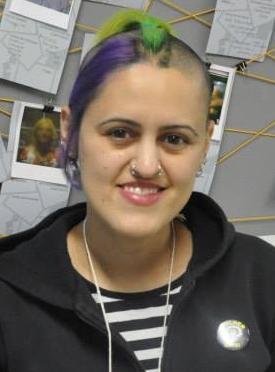 Fabiane Kravutschke Bogdanovicz is a Brazilian social psychologist. She worked for 4 years as a Solidarity Economy Technician at a University Social Incubator, supporting the organization of cooperatives and associations in the areas of artisan crafts and agroecological agriculture (organized by the Landless Workers Movement), and community associations. She has been a representative at Solidarity Economy Regional and State Forums, City Council, and National Conference, among other political spaces. She is a researcher of Social Movements, Communities and Participatory Democracy.