
Author

Jim Schenk, founded Imago www.imagoearth.org, with his wife Eileen, in 1978, where he was director for 28 years, and now works as program coordinator. Jim lives in and is involved in creating Enright Ridge Urban Eco-village www.enrightecovillage.org as a local and national model for sustainable living in our urban areas. He edited the book, What Does God Look Like in an Expanding Universe, which examines how our images of God, life and death influence our relationship with the Earth.  He holds Master’s Degrees in Theology and in Social Work.  He is an adjunct faculty member at The Union Institute and University http://www.myunion.edu/.

Doris Lee was formerly the editor of Asia Monitor Resource Centre, an Asian labor NGO based in Hong Kong where she worked for five years. Before that, she worked for four years in banks doing loan syndications in Asia. She has a Master's degree in International Affairs, completed in 1997, just before settling down in Hong Kong to live. Besides promoting No Chains, she is also closely involved in the domestic worker rights' movement in Hong Kong.

John Murphy is a 40-year radio veteran and community media activist. A continuing focus for his work has been on radio station management, consulting and networking, as well as increasing public access to technology in service to human and community development. John is a Goddard College alumnus — with a BA in media studies and community development and MA from the Socially Responsible Business and Sustainable Communities (SBC) Program. John currently serves as Adjunct Faculty in the Communications Department at Eastern Connecticut State University and is producer of the weekly "Pan American Express' program on WECS Radio. John also co-produces and hosts the community TV program series On the Homefront (560 programs in 15 years). John is also Owner/President of Human Arts Media, a community media consulting and production company. In 2008 he received a State of Connecticut General Assembly Official Citation Award for 30 years of public service in college/community radio. In 2011 John received a Wavy Gravy Basic Human Needs Award from the Seva Foundation for media service to the arts and local communities.

John Murphy: EMail; Web; 860-377-7166


Len Krimerman lives, works, dances, and dreams in rural eastern Connecticut, and has helped build bridges between the many varieties of grassroots democracy over the past five decades. In this, he has invariably been mentored by his amazing GEO colleagues, by the imagination and support of his lifelong partner, Marian Vitali, and by the courageous activism of so many of his students and community partners. Marian and Len are now engaged in helping develop the Windham Hour Exchange, a community barter initiative in and around Willimantic, CT.

Tusz-King is Atlantic Director of the Board of Directors and Vice-President of the Canadian Worker Co-operative Federation (http://www.canadianworker.coop/).  He is also a founding member and manager of EnerGreen Builders Co-operative in Sackville, New Brunswick, Canada (www.energreen.coop), and founding member and Chair of Open Sky Co-operative Board (www.openskyco-op.ca).  Co-operative Developer and Diaconal Minister in The United Church of Canada, Eric is a husband and father in a family of four children and two grandchildren with his wife, Margaret Tusz-King.

Tim Huet helps to establish and develop bakery cooperatives through the  Arizmendi Association of Cooperatives, which he co-founded in Northern California. He was previously a member of Rainbow Grocery Cooperative, where he served in various management capacities.  He also served as a Board Director for the U.S. Conference of Democratic Workplaces. Tim serves other worker cooperatives as an organizational consultant and attorney. His writing on cooperatives and self-management has been published in Dollars & Sense, Grassroots Economic Organizing, Peace Review, and The Stanford Law & Policy Review.

For over 40 years my main occupation has been managing a community through a collective face-to-face process. This has involved ongoing experiential learning about personal development and culture building.

My secondary occupation for the past 20 years has been reflecting on how to apply that rich learning to developing democracy on larger scales. The Growing Democracy Project is the outcome. It is not an answer. Rather, it is a solid starting point.

This work began in 1980 with co-founding a small experiential research project on the North shore of Staten Island New York. Our purpose was to learn how people can make creative use of face-to-face conflict in the process of managing joint projects. We worked on this intensely 24/7 for 20 years.

In the process we built an intentional communityGanasof more than 80 people, 8 houses, five commercial properties, and three retail stores.

We shifted gears into a less intense life around 2000, and became somewhat smaller in the process. Throughout these four decades we have been practicing face-to-face communication and collective management of the community.

Around 2008 I began exploring how what we had learned could be applied to everyday democracy. This led to 4 years of field research in the cooperative/solidarity economic movement. In turn, this led to 10 years of active involvement in the movement as an active member of the Grassroots Economic Organizing Collective (GEO). 

At GEO I was a blogger, writer, reviewer, interviewer, and editor. I am also a co-author of Building Co-Operative Power! Stories and Strategies from Worker Co-Operatives in the Connecticut River Valley (2014).

All the while I was doing extensive study in many fields of social science, adult transformative learning, evolutionary thinking, history, and political theory. In 2017 I began to pull all of my experience and study together into what became the 140,000 word Growing Democracy Workbook as well as the Growing Democracy Project vision. Now, at the end of summer 2023, we are bringing this to the world.

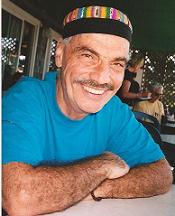
Lazri DiSalvo is a doctoral student and instructor in the political science department at the University of Connecticut. His research focuses on co-operative development in post-conflict regions in the world, including Nicaragua, East Timor, and Rwanda.

Jessie Myszka is a DAWN-certified Peer Advisor and has been a worker owner at Equal Exchange since 1996. Participating with DAWN’s pilot with Kiva Zip has been a great way to combine her background in Sales (seven years) and Operations (nine years), serving on the board at a consumer grocery cooperative, and volunteering locally with community development for small businesses.